While everyone debates whether AI will replace programmers (and when), I use neural networks as helpers in everyday household quests. Here are a few of my cases.
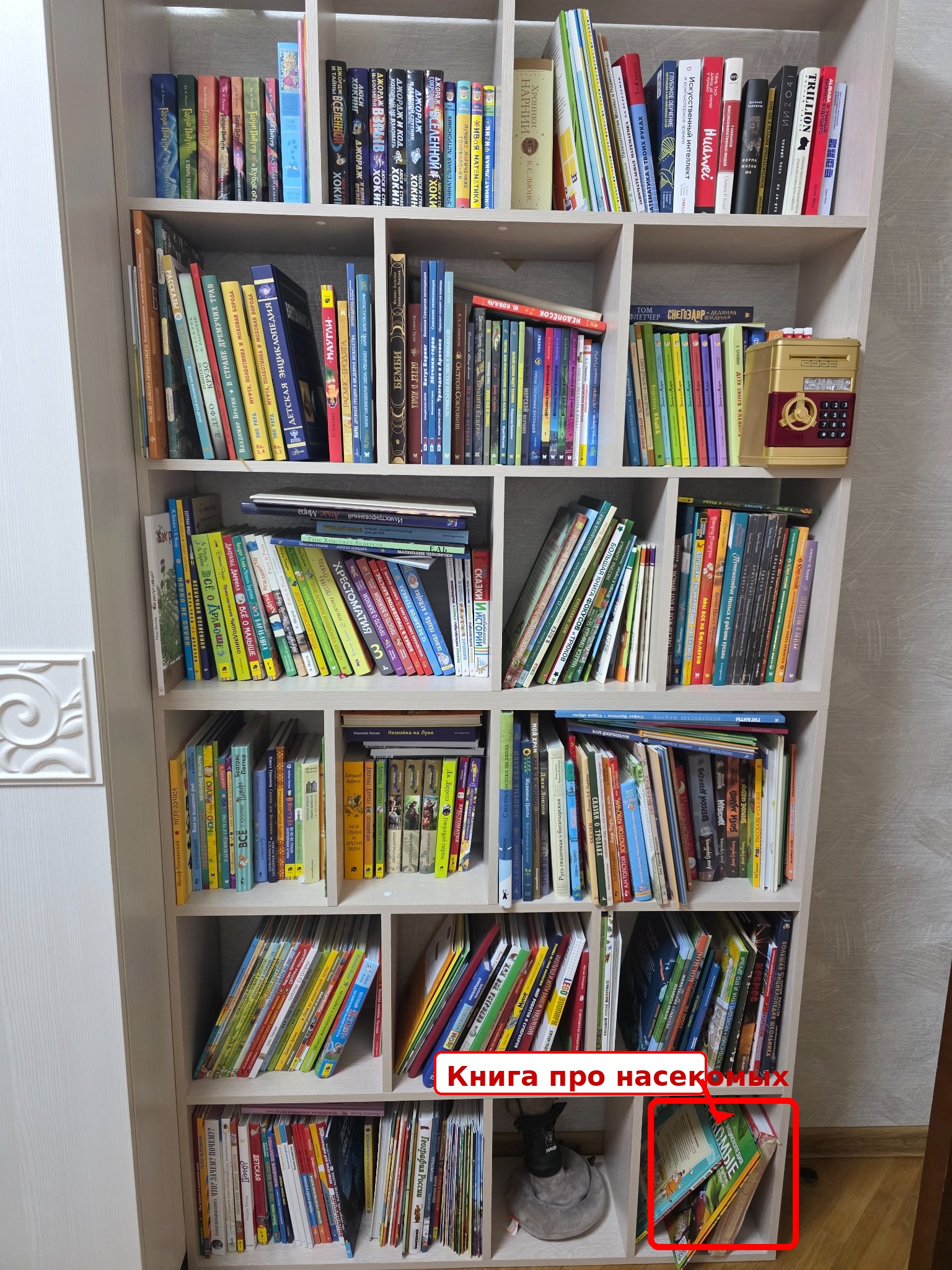
Finding a needle in a bookshelf haystack. My younger son wanted to read about insects before bed. I knew we had the book somewhere, but we have so many children’s books by now, and nobody remembers what the cover or spine looks like. The prospect of sorting through every single book was looming…
I got curious whether a neural network could help. I took a photo of the shelf and fed it to several models. Only one nailed the challenge – it not only recognized the book by its cover and spine, but pointed right at its spot on the shelf. It even offered to categorize the whole library.)
That got me wondering – could it count how many books we’ve accumulated in total? I uploaded photos of the bookshelves. The model worked away, wrote Python scripts, and ended up counting over 600. A spot check by hand confirmed the margin of error was small.
Find the same one. A kitchen handle broke. Seems trivial, but stores carry thousands of them, and they all look “almost the same.” This time a combination of models did the trick. First, I used one to generate a product-card mockup from a photo – exactly the angle and format you see on marketplaces. With this “professional” mockup I went into visual search. International services predictably came up short, but Yandex’s Alice performed brilliantly and within half an hour found very similar options.
Takeaway. Neural networks in everyday life aren’t just about text and research. They’re gradually becoming an additional layer on top of reality. There’s no universal model yet – and maybe there never will be – but a combined approach works. One model excels at logic and working with code and data in photos, another is great at producing visual content, and a third is unbeatable when you need to find something specific at a nearby store. And most importantly – they save time, and time is an especially precious resource right now.