AI Under Control
Security Director (Директор по безопасности) magazine is publishing my series of three articles on what changes inside an organization when an AI agent becomes a “digital employee.”
Today I research AI agent security, and I put together a structured analysis of this topic for security leaders – from understanding the nature of these systems to real-world adoption practices and a target governance model. When the business itself brings an agent into the internal environment and grants it legitimate access to corporate data and systems, the boundaries of security oversight change. An agent chooses its steps on the fly, can make mistakes or disregard risk in pursuit of a task, and – in terms of the potential impact of its own actions or external manipulation – ends up in the position of an insider. Meanwhile, authority and accountability for launching and maintaining such systems are often scattered across departments, while the security team is ultimately called in to deal with incidents.
How Two Earlier Interests Converged in One Topic
For me, this topic brought together two long-standing professional interests.
My path in information security began at the Department of Secure Information Technologies at ITMO University, and my first professional fascination was insider threats. It started when someone came to our department asking for help finding an internal malicious actor at his company who was periodically switching a massive 50-port network switch into hub mode – apparently to sniff traffic afterward and extract information of interest. We helped catch the offender, and from that point on I was hooked on countering insider threats. I dived into network analysis, and for a while my best friend was IRIS Network Analyzer.
Threats from insiders are just as real as threats from external hackers, except these people are already inside the perimeter and therefore require a different approach. Detecting them was a fascinating challenge, especially since many detection and defense mechanisms were still immature at the time. I made solid practical progress: I created a series of network analysis labs for students based on real cases and wrote an applied research paper that won a scientific competition.
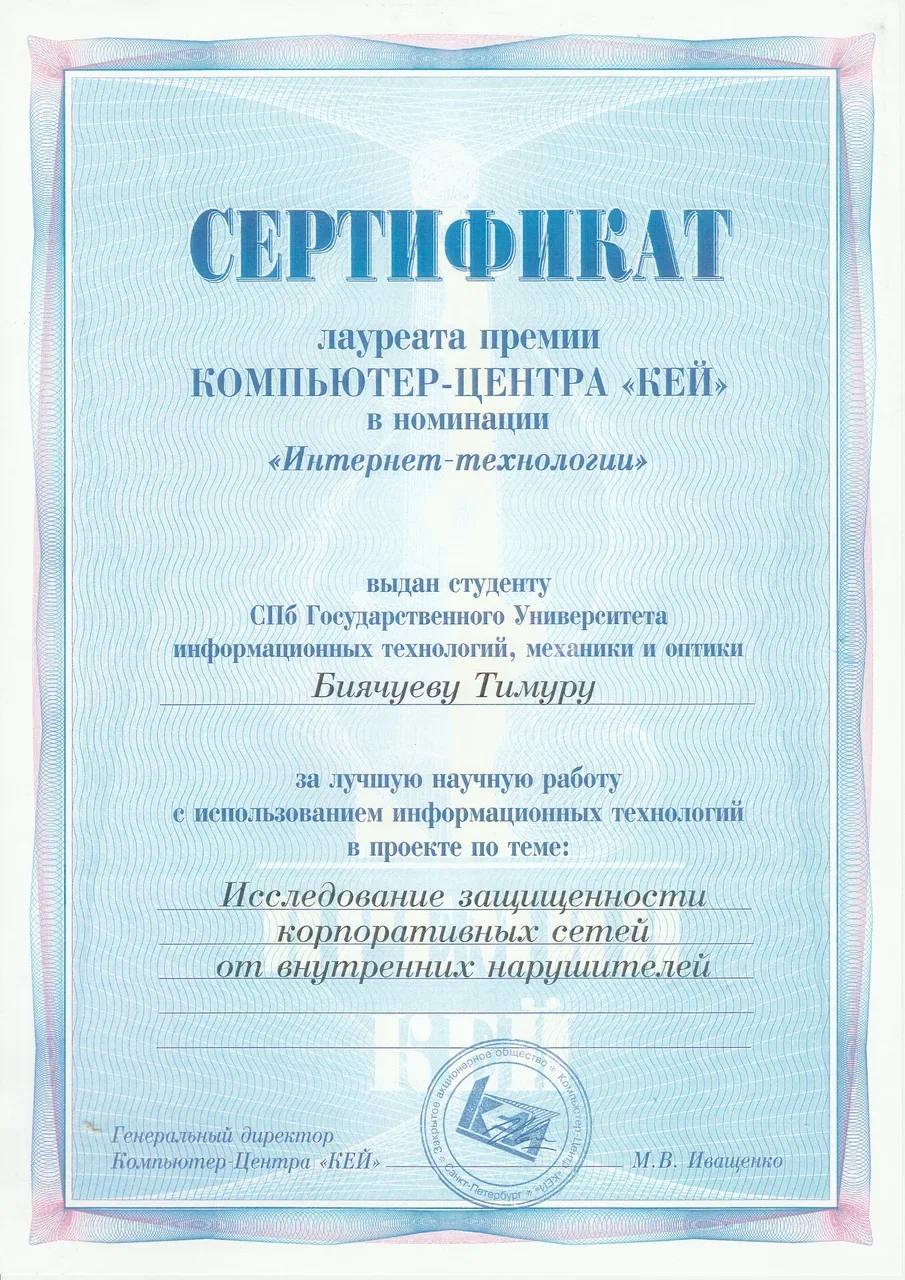

Award ceremony and certificate for the research paper “Study of Corporate Network Security Against Internal Offenders,” 2005
Later, Kaspersky Lab decided to set up an antivirus test lab at ITMO, which I headed. My focus shifted to computer viruses – countering programs that act autonomously, even if according to pre-programmed algorithms, turned out to be even more captivating. I then moved to Kaspersky Lab itself, where I led the full-scale Antivirus Lab – fighting cyber threats of all kinds and automating analysis and detection processes with machine learning.
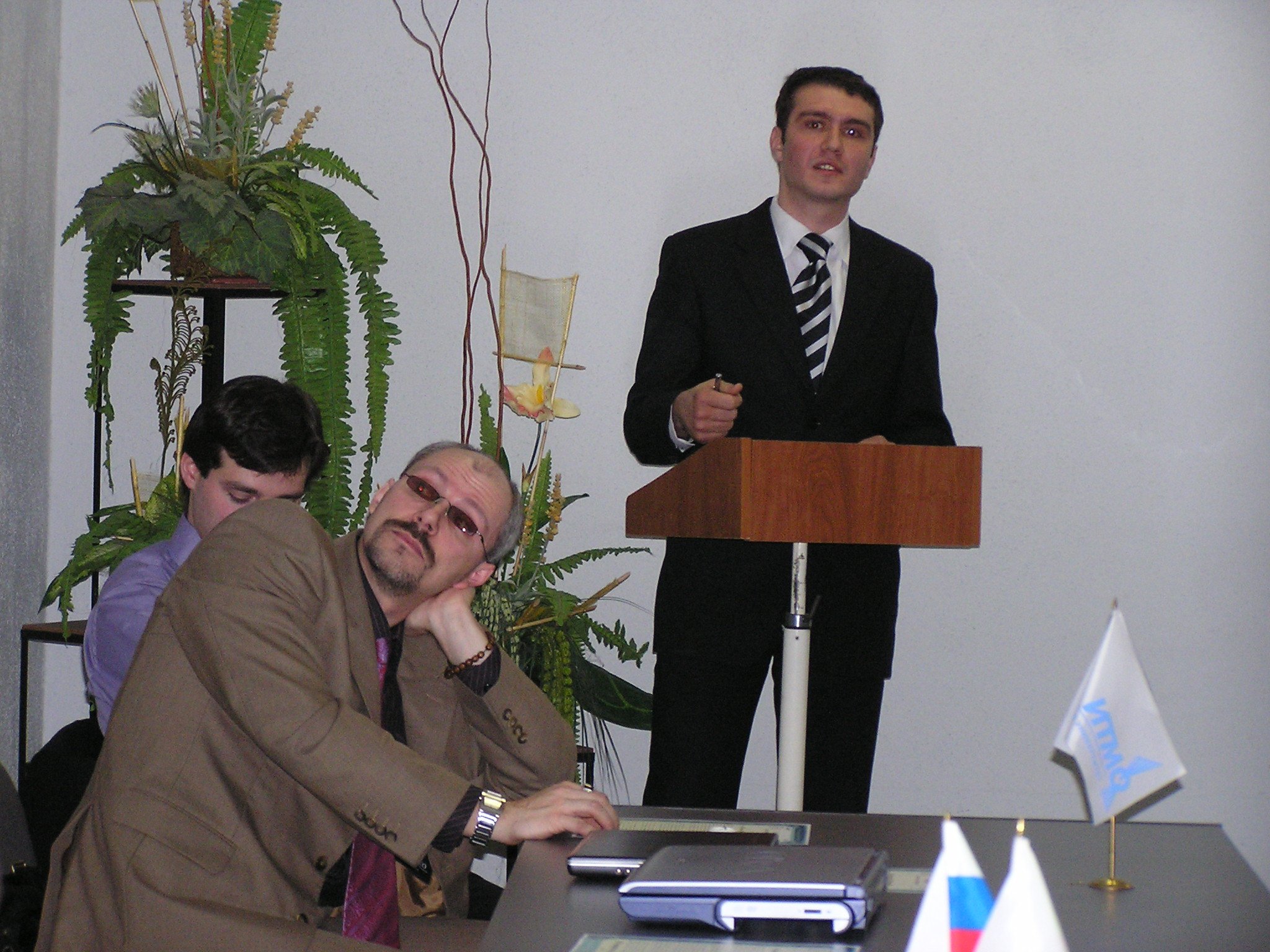
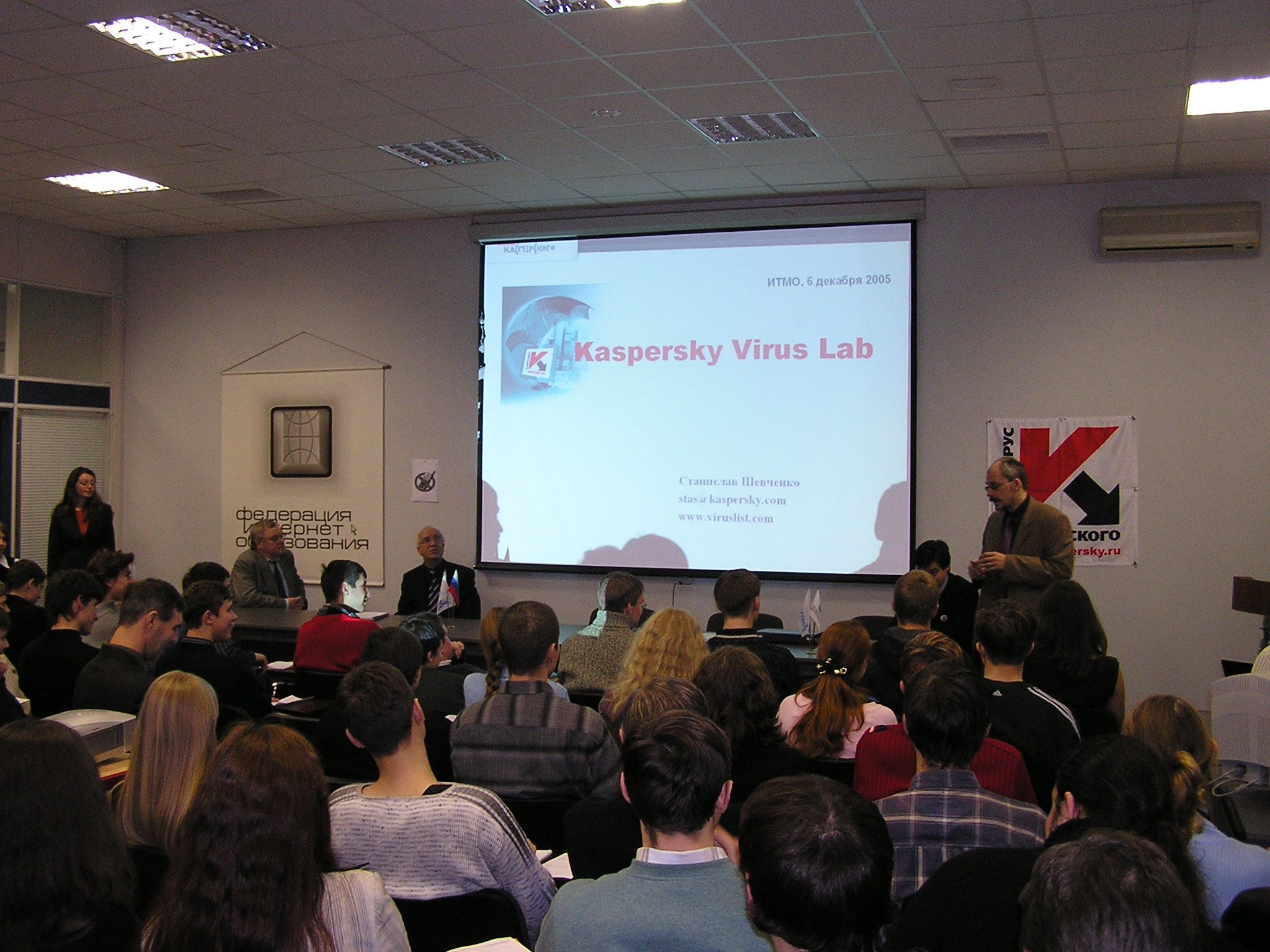
The ITMO antivirus test lab and Antivirus Day with Kaspersky Lab, December 2005
AI agents brought these two areas of interest together: autonomous action selection is combined in them with internal access and the capabilities of an insider.
Articles in the Series
1. When AI Becomes an Employee
The first article examines the nature of agentic systems and the new area of responsibility for corporate security. It was published across two issues of the magazine (in Russian):
– Part 1. What Appears Inside an Organization Alongside an AI Agent – personal experience threat-modeling my own agent, a practical criterion for distinguishing an agent from a simple chatbot or RPA, the difference between semantic failures and ordinary code bugs, the reasons why simply banning agents will not work, and the three roles agents have already played in real-world incidents.
– Part 2. Philosophy of Defense (full text requires a magazine subscription) – top-down shadow AI, how risk ownership is distributed inside a company, new assets to protect (system prompts, long-term memory, tools), a snapshot of Russian regulation, and the questions worth asking at the start of an AI project.
2. AI Agents in Russian Companies: From Experiments to Established Practice (coming soon)
Drawing on more than a hundred conference talks and engineering publications, the second article examines how Russian companies are deploying agents in practice: what permissions agents are already trusted with in business workflows, why speeding up one stage creates bottlenecks during review, how to assess process readiness before scaling, and why every scenario needs a designated process owner.
3. AI Under Control (in preparation)
The concluding article of the series focuses on the target architecture for securing and governing digital employees – from discovering untracked agents inside the corporate perimeter and protecting memory, prompts, and tools to restricting dangerous permission combinations and investigating incidents using the agent’s execution history.
I write about my experience, observations, and working theories on how AI is changing products, work, and us here:
Telegram channel: @tbiyachuev